



Florida Native Four-Lattice Pottery
This is a Florida native pottery. This four-compartment pottery is from the Tarrant Collection of the Bishop Museum of Science and Nature (formerly the Museum of South Florida) in Bradenton, Florida. It consists of four connected circular grooves, forming a whole square or plum-shaped container. The surface is rough, the color is yellow and brown, and there are signs of wear. It is speculated that it may be carved from stone. In ancient times, similar four-compartment containers were found in different cultures. For example, four-compartment containers of bronze, marble or pottery used to hold pigments were unearthed at the sites of the late Shang Dynasty in China.

Etruscan period black glazed pottery bowl - Castello Banfi collection
It is a ceramic artwork from the ancient Etruscan civilization, with orange clay as the base and black paint on the surface. The interior is decorated with concentric circles, a decorative style that is quite common in ancient pottery. This specific black light bowl belongs to the "Small Seal Studio", which is a production method in the Etruscan Lazio region. It can be traced back to the 3rd century BC. This work was discovered in Poggio Almura in Montalcino and belongs to the Castello Banfi collection.

Castiglione Double Eared Vase Pottery - Igleio Archaeological Museum
The double eared vase originating from Castiglione region is an ancient pottery from the province of Ragusa in Sicily, Italy. It can be traced back to the classical era, around the 6th century BC. In the collection of the Igleio Archaeological Museum. Usually used for storing liquids, and due to its design, it is easy to carry and transport. It has significant value in archaeology and is also an important window for understanding ancient Sicilian culture and way of life. The design and production techniques reflect the high level of craftsmanship and aesthetic concepts of the society at that time. By studying these cultural relics, we can gain a deeper understanding of the history and culture of the ancient Mediterranean region.

Nazca Double Mouth Bridge Pottery - American Collection, University of Bonn
It is an ancient pottery with unique design and decoration, representing the artistic achievements of the Nazca culture in Peru. Made of clay, it is characterized by two cylindrical pipes connected by a flat middle horizontal bar, forming a double mouth structure. This design is not only practical, but also has high artistic value. The surface decoration is rich and colorful, using multi-color paintings, which indicates that the Nazca culture has superb painting and decoration skills in pottery production. The Nazca culture existed approximately between 200 BC and 700 AD, mainly distributed in the Nazca Valley region of southern Peru. It is currently housed in the American Collection at the University of Bonn.

Ancient snake shaped ceramic container

Mammalian shaped stirrup pot - Bonn Collection, America
In the Bonn American Collection, there is a mammalian shaped stirrup pot. The main design of this pot imitates the image of a lying, curled mammal, with a very large stirrup relative to the body and a long neck. The origin of this stirrup pot is not yet clear, it was collected by Teddy Hahn. The stirrup jar is an ancient pottery commonly used to hold liquids such as oil or wine, and its design and production techniques reflect the level of craftsmanship and aesthetic style of ancient civilization. It is not only a practical container, but also a work of art that embodies the creativity and skills of ancient craftsmen.
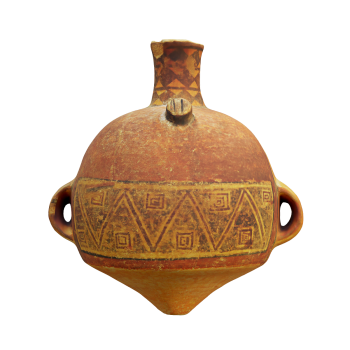
Late Inca civilization pottery
It is a type of pottery unique to the late Inca civilization, which lasted from approximately 1450 AD to 1552 AD, the peak of the Inca Empire, until the arrival of the Spanish conquerors. Pottery with distinct characteristics, with a spherical or oval body, a pointed bottom, handles or "wings" on both sides, and a wide and flat mouth at the top. The pottery art of the Inca period is famous for its rich colors and exquisite decorations. Decoration usually includes geometric patterns, animal and plant images, or mythological stories, which not only showcase the aesthetic concepts of the Incas, but also reflect their religious beliefs and social values.

Pottery made by Chim ú culture
It is a pottery made by the Chim ú culture, dating back to the Intermedio Tard í o period, approximately between 200 and 600 AD. Chim ú culture is an important civilization in the history of the Andean region of South America, known for its exquisite metalworking and large-scale architectural works. The pottery art of this period demonstrated a high degree of technological and artistic achievement, reflecting the political division and cultural diversity of the society at that time. Not only is it a practical daily item, but it is also an important archaeological material for studying cultural and social structures, religious beliefs, and artistic styles.

Colored Pottery Cup - American Bonn Collection Series
The colored pottery cup with painted face is a colorful pottery item in the Bonn Collection of America. This cup shaped vessel has two vertically mounted handles. The opening edge of the vessel is irregular, with a wreath composed of vertical lines drawn alternately in ochre, red, and black colors. The ochre colored face placed between the two handles is painted with X-shaped eyes and a mouth with a well-defined nose. This face looks clear and cheerful, with wide open eyes, a bean shaped smile, and dimples. The diamond shaped eyes are framed by black C-shaped lines, with prominent eyebrows on top. Belonging to Teddy Hahn's collection.

Geometric Pattern Ancient Pottery - Bonn Collection Series in the Americas
The geometric patterned container in the Bonn Collection of America is an ancient pottery with a mysterious origin. Its specific place of origin is not yet clear, which adds a sense of mystery and research value to it. The surface of the container is decorated with geometric patterns, which not only showcase the artistic aesthetics of ancient people, but may also contain specific cultural or symbolic meanings. Through the study of geometric patterns, scholars can gain a deeper understanding of the artistic styles, religious beliefs, and social structures of ancient civilizations.

Khmer Civilization Container
It is an ancient Khmer civilization pottery from the 1st century BC, currently housed in the Minneapolis Museum of Art. This container is a representative of Khmer art and craftsmanship, reflecting the achievements of Khmer culture in pottery making technology at that time. The shape, decoration, and materials of the container may reveal the social customs, religious beliefs, and aesthetic tendencies of the time.

Owl shaped lime jar
It is an ancient pottery from the 1st century BC, currently housed in the Minneapolis Museum of Art in the United States. The shape is inspired by the design and reflects the special emotions and symbolic significance of the ancient people towards the owl, a nocturnal bird. In many cultures, owls are often associated with wisdom, mystery, or supernatural powers. Not only is it a practical container, but it is also a beautiful artwork. The production involves fine craftsmanship, perfectly combining practical functions with artistic decoration. By imitating the shape of an owl, this pottery showcases the ancient people's ability to observe the natural world and artistic creativity.

Peruvian Chancay style pottery
Known for its unique "black background and white flowers" style, it is one of the most representative works of art in Peru's pre Spanish coastal civilization. Mainly using white as the base, drawing geometric patterns and vivid animal images in black or brown, such as fish, monkeys, cats, birds, as well as complex mesh patterns, squares, and Greek patterns. The production techniques include manual molding, as well as commonly using molds and small sculptures for decoration. Some vessels are decorated with head models on their necks, usually accompanied by headpieces, earrings, and facial paintings, known as "Chinas". In 2023, Swiss authorities returned Chancay style pottery.
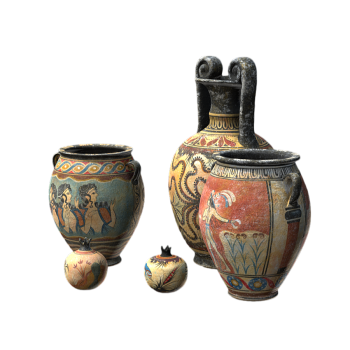
A group of pottery 3D models of the Cretan civilization
Minoan civilization, also translated as Minoan civilization, is an ancient civilization in the Aegean region, appeared in ancient Greece, the Bronze Age before the Mycenaean civilization, about 2850 BC -1450 BC. The development of this civilization was mainly concentrated on the island of Crete.
The Minoan civilization, to be exact, should be the civilization of the Crete region. The Cretan civilization originated in ancient Egypt and Asia Minor. Judging from the unearthed objects, Crete was once a good trading port in the early Mediterranean and had close commercial ties with ancient Egypt and Asia Minor.

Popular Models


Honey Badger (3D animated model)
194 View

Guinea fowl (3D animated model)
165 View

Wild Goose (3D animated model)
187 View

Red Fox (3D animated model)
155 View
Random Model

Simulation of the Moon Model
407 View

Fox 3D Model Animation
1081 View

KTM-450EXC off-road motorcycle
1140 View

GB 2024 Calculator
979 View
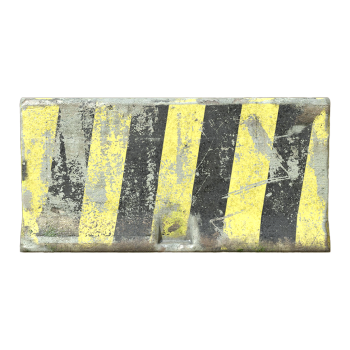
Concrete road barrier
885 View

Ivy 3D model
974 View

Polish Prwotsk Religious Church
1359 View

Spinosaurus (3D animated model)
188 View

Dining Room Chair
629 View

Three-seat sofa
646 View